
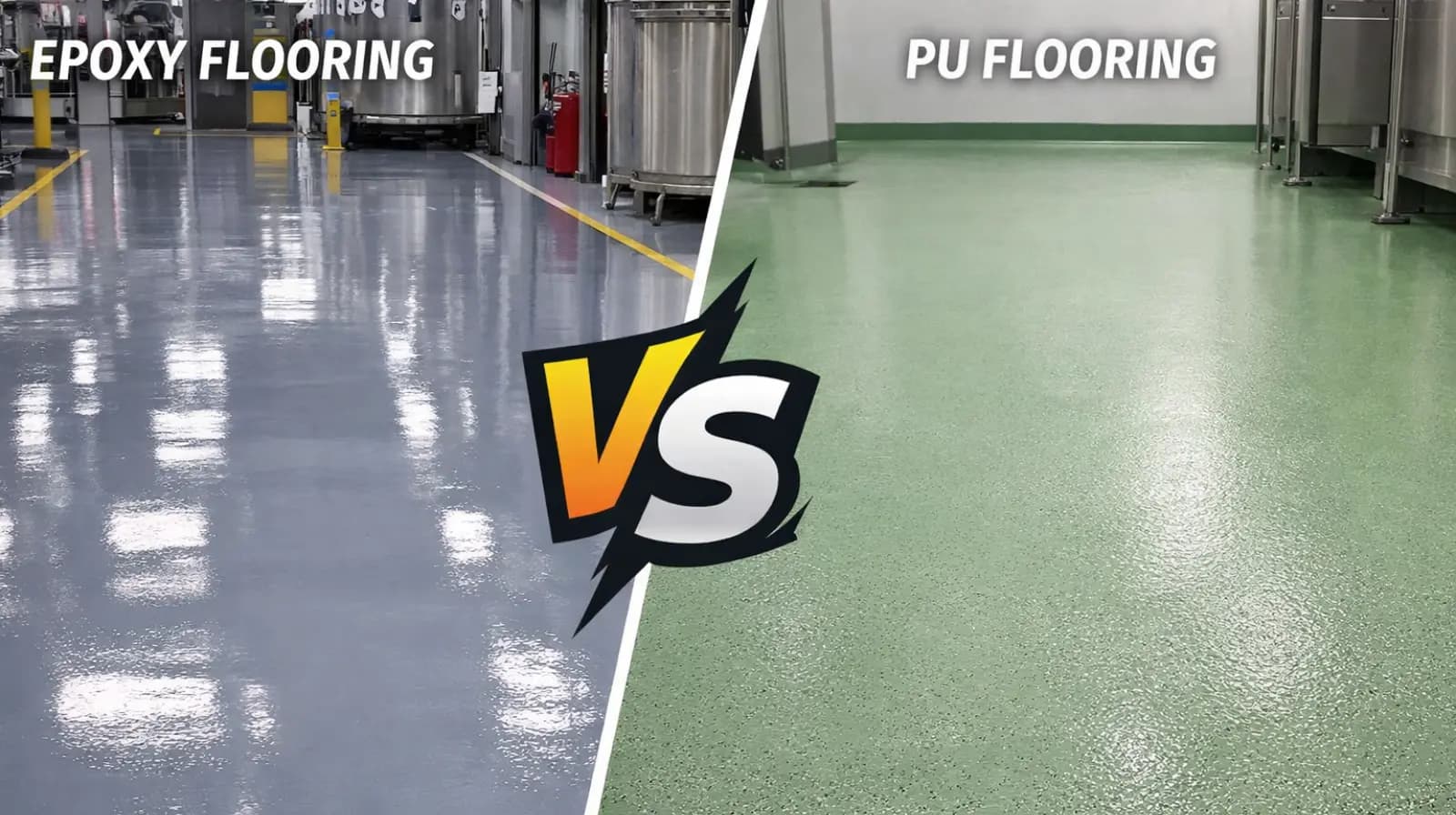
In today’s era of rapidly evolving industrial and commercial spaces, flooring is not just about aesthetics. Durability, safety, and moisture resistance have become paramount, especially in regions experiencing heavy rainfall. At Bluelotus, a leading safety solution provider, we understand the critical importance of epoxy flooring, PU flooring, moisture-resistant flooring, slip-proof floors, and monsoon flooring solutions in safeguarding your space, equipment, and personnel.
Epoxy flooring is a durable, seamless coating created by combining resin and hardener. Its hard-wearing surface provides excellent resistance against chemicals, stains, and mechanical wear. Ideal for factories, warehouses, and garages, epoxy floors ensure a robust foundation that withstands high traffic and heavy loads.
On the other hand, PU (Polyurethane) flooring offers superior flexibility compared to epoxy. It is highly resilient against impacts, temperature fluctuations, and mechanical stress. Its inherent elasticity makes PU flooring perfect for spaces that experience constant vibration or heavy movement, such as sports halls, laboratories, and parking areas.
Feature |
Epoxy Flooring |
PU Flooring |
|---|---|---|
|
Flexibility |
Rigid |
Highly flexible |
|
Resistance to Impact |
Moderate |
High |
|
Chemical Resistance |
Excellent |
Excellent |
|
UV Stability |
Poor (prone to yellowing) |
Excellent |
|
Monsoon Performance |
Prone to minor cracking in wet areas |
Ideal for wet and humid conditions |
|
Slip Resistance |
Moderate |
High (slip-proof options available) |
Moisture can significantly reduce the lifespan of conventional flooring, leading to cracks, mold growth, and slippery surfaces. For industries, warehouses, or even commercial spaces in regions with heavy rainfall, moisture-resistant flooring is non-negotiable. Both epoxy and PU floors provide seamless, water-resistant surfaces, but PU flooring excels in maintaining integrity during prolonged exposure to water or humidity—making it a preferred choice for monsoon flooring solutions.
Slippery floors are a leading cause of workplace injuries. Slip-proof floors not only protect employees but also minimize liability risks for businesses. PU flooring offers a textured finish or anti-slip coatings that provide optimal traction even in wet conditions. Epoxy floors can also be treated with anti-slip additives, but PU’s flexibility and surface adhesion make it superior for high-moisture environments.
Industrial Spaces – Both flooring types are excellent for factories, warehouses, and heavy machinery areas. Epoxy provides hard-wearing surfaces, while PU accommodates vibration and mechanical stress.
Healthcare and Laboratories – PU flooring is ideal due to its chemical resistance, antimicrobial properties, and seamless finish, ensuring hygiene and safety.
Parking Lots – High vehicle traffic and oil spills demand slip-proof, moisture-resistant flooring, where PU flooring offers superior protection and durability.
Sports Facilities – PU flooring absorbs shocks and prevents injuries, making it the top choice for indoor stadiums and playgrounds.
Commercial Spaces – Both flooring types enhance aesthetics and safety in retail stores, offices, and shopping centers
The monsoon season can wreak havoc on conventional flooring. Epoxy may crack under excessive moisture or thermal expansion. In contrast, PU flooring is designed to handle fluctuating humidity and wet conditions, maintaining durability and safety. Its seamless surface prevents water infiltration, reducing the risk of mold, mildew, and slip accidents.
Regular Cleaning: Use neutral pH cleaners to maintain smooth, slip-proof surfaces.
Inspect for Damage: Early detection of cracks or chips prevents water infiltration and structural damage.
Reapply Protective Coatings: Periodic reapplication of PU topcoats ensures UV, moisture, and slip resistance.
Epoxy flooring is ideal for heavy traffic and load-bearing areas due to its rigidity and hardness.
Yes, PU flooring is highly flexible, moisture-resistant, and ideal for monsoon or humid regions.
With proper maintenance, epoxy flooring lasts 10–15 years, and PU flooring can last 15–20 years, depending on usage and environment.
Yes, PU flooring can be customized with anti-slip coatings to ensure maximum safety, especially in wet conditions.
Epoxy flooring has a lower initial cost, but PU flooring’s longevity, flexibility, and moisture resistance make it a better long-term investment.
At Bluelotus, we specialize in delivering safe, durable, and high-performance flooring solutions tailored to modern-day challenges. From industrial complexes to commercial centers, our expertise in epoxy flooring, PU flooring, moisture-resistant floors, and slip-proof monsoon flooring solutions ensures that your spaces remain safe, durable, and visually appealing year-round.
Invest in safety, durability, and efficiency—choose Bluelotus flooring solutions today.